Can the Crescent Mini Handle Soft French Base Prep?
We explain how to use the NFB-41m crescent mini 100/180 buffer to matte the plate, blend the free edge, and protect edge definition.
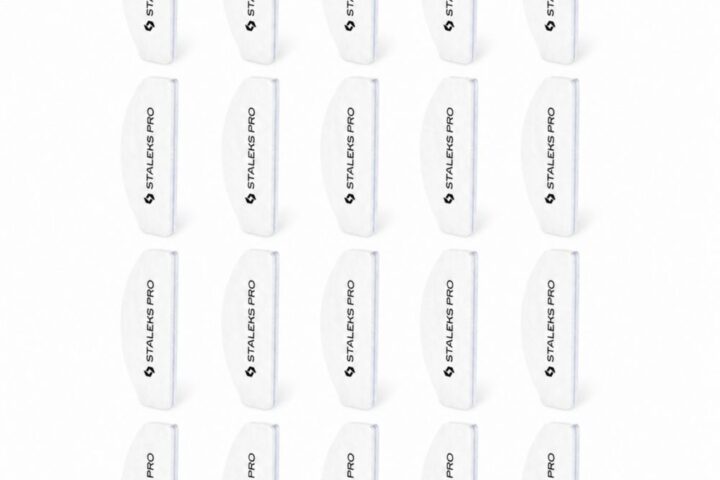
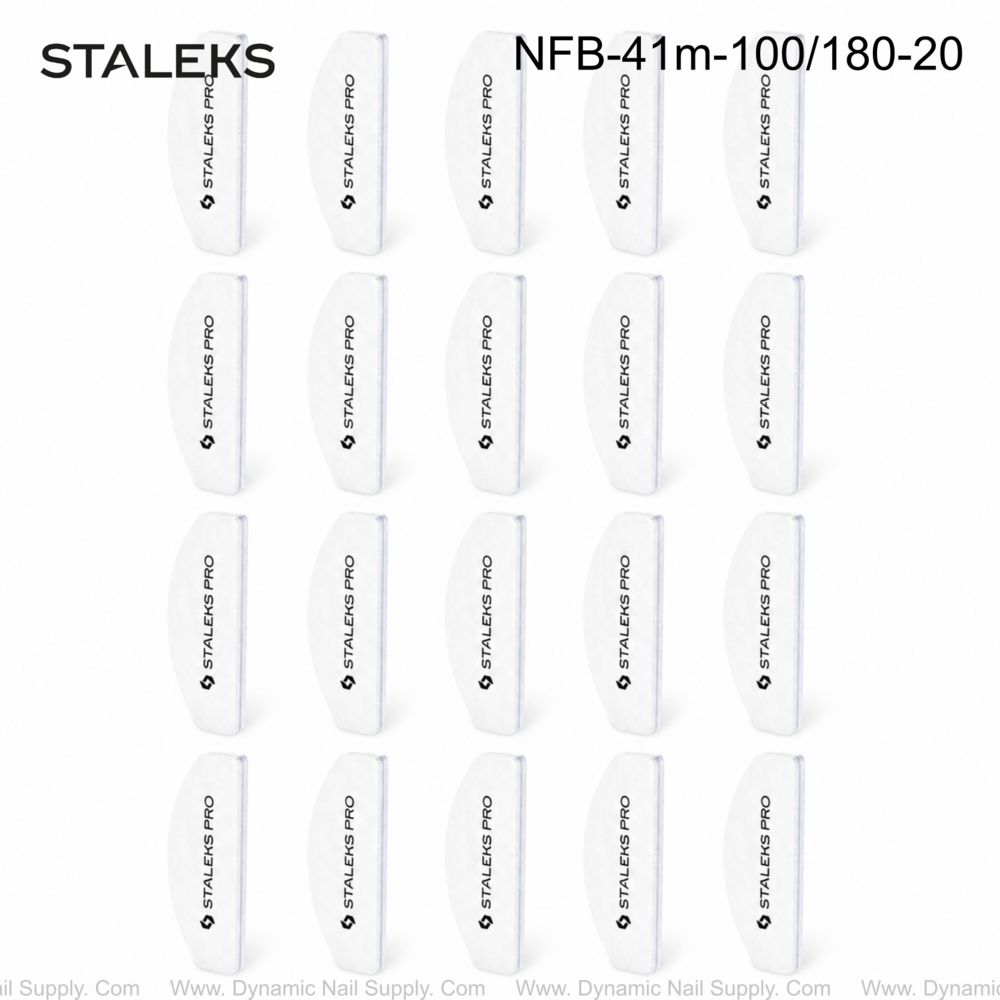
The NFB-41m-100/180-20 Staleks Grinding buff crescent mini EXPERT 41 100/180 grit (20 pcs) is a compact dual-sided nail buffer designed to shape, smooth, and prepare both natural and enhanced nails for a soft French base with a matte topcoat.
How should we start prep to preserve a soft French edge?
Begin by removing old product and cleaning the nail plate, then decide where your smile line will sit so every motion of the mini crescent follows that curve; its short, curved profile is built to fit neatly along the free edge and sidewalls, which helps us avoid over-filing the smile line while we level the nail surface for a muted, even base.
What’s the right sequence for using the 100 and 180 sides to avoid uneven finish?
We use the 100-grit side only where stronger correction is required—on ridges, lumpy overlay edges, or to slightly reduce thickness on enhancements—working in light, controlled strokes that follow the crescent arc. Then we switch to the 180-grit side to refine and feather any transitions so the plate reads consistently matte under your topcoat; the finer side smooths without creating glossy spots that would show through a matte finish.
How do we prevent shine transfer and maintain the soft, powdery matte look?
Shine transfer happens when a surface is overly smoothed or compressed; to prevent that, we avoid long, heavy passes with the 180 side across the entire plate. Instead, we use short, directional strokes radiating from the cuticle toward the free edge, leaving a subtle, even texture that accepts a matte topcoat without becoming glossy. For localized smoothing near the cuticle or sidewalls, the mini crescent lets us control pressure and angle so we don’t flatten the natural curvature that defines the French silhouette.
Why does the crescent shape help with edge definition and how do we use it without rounding the free edge?
The crescent profile fits under the lateral walls and along the smile line so we can blend the free edge into the nail body without removing the crisp transition that creates a soft French look; to keep the edge, we angle the buff slightly and make one light pass along the underside of the free edge rather than filing from tip to cuticle repeatedly, which can round the smile line and reduce definition.
What common mistakes cause lifting or poor adhesion before applying a matte topcoat?
Lifting often follows poor surface prep—oily residue, dust, or an uneven matte surface. We always dry buff with the 180 side to remove fine dust, then clean with a lint-free wipe and a recommended preparation liquid. Because these mini buffers are designed for single use, swapping to a fresh piece for each client reduces contamination risk and ensures the abrasive still has its intended texture for consistent adhesion.
How do we handle tiny areas like cuticle corners without causing irritation?
Specially rounded ends on this mini buff are intended to improve comfort when working near sinuses and the cuticle; we make micro-strokes parallel to the nail surface rather than digging in, keeping contact time short and checking the client’s comfort. The compact size helps us navigate tight corners while keeping pressure light.
Quick specs
- Grit: 100/180 dual-sided
- Shape: Mini crescent, 85 × 30 × 12 mm
- Quantity: 20 single-use pieces
- Color/finish: white abrasive, pale blue edge, matte grainy surface
When we need a practical, single-use option that lets us finish edges precisely and create a uniform matte texture across the nail plate, the EXPERT 41 mini buff is the tool we reach for because its short, curved profile and two-grit layout let us correct, refine, and control the look before sealing with a matte topcoat.
How do we troubleshoot a blotchy matte topcoat after prep?
- Re-examine texture: if some zones look shinier, give those spots a few gentle passes with the 180 side to match surrounding areas.
- Remove dust: blow or brush away residue and follow with a wipe to avoid trapping particles under the matte finish.
- Check product sequence: ensure base and matte products are compatible and applied thinly—heavy layers highlight surface inconsistencies.
These mini buffers are economical for salon use (about $7.49 per pack at time of writing; price may change) and work well when we follow single-use hygiene practices and avoid overworking the plate.
What safety or handling notes should we remember?
Handle with light, controlled pressure to avoid heat buildup and client discomfort; because these are designed for single use, discard after each client or procedure. Keep away from moisture in storage to preserve the abrasive coating and avoid cross-contamination by storing unused pieces in a clean, dry container.
Quick reference:
- Start with 100 grit only for correction, then 180 to refine.
- Use the crescent curve to follow the smile line, not to file across it.
- Short, directional strokes preserve matte texture and edge definition.
- Dry buff, clean thoroughly, and apply thin layers of products before matte topcoat.